
Customer systems work best when they reduce uncertainty instead of creating more administration. That starts with a shared understanding of what belongs in the CRM and what the team should do next.
Start with the decisions your team makes
A useful CRM is not a database with every possible field. It is a working record of the people you serve, the commitments you have made, and the opportunities that deserve attention.
Before adding a field, ask what someone will do differently because that information exists. If there is no clear answer, it is probably noise.
Build the smallest reliable routine
Choose a simple rhythm: capture new relationships, record the meaningful interaction, set a clear next step, and review the pipeline together. Consistency matters more than elaborate configuration.
- Keep ownership visible.
- Make the next action concrete.
- Review stale work before it disappears.
- Use automation to remove repetition, not accountability.
Let AI reduce the admin
AI can help find context, prepare summaries, and structure routine updates. The user should still understand what will change and remain in control of material actions.
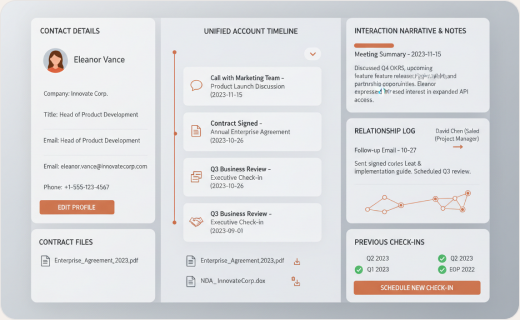
Choose one clear next step
The best customer systems make the next action obvious. End every review by deciding who owns the relationship, what should happen next, and when the team will return to it.